
Haiku Workshop
Date: Saturday, April 4th
Time: 10:00am - 11:00am
Location: Education Center
JFGM Member $20 | Non Member $35
*Admission to the garden is included.
*Registration required. Refunds will not be given less than 7 days before the program.
Encountering Haiku for Creativity
The two plum trees —
I love their blooming!
one early, one later.
- Yosa Buson
How might the brief and graceful form of poetry known as Haiku inspire and inform your own creative work?
In this workshop, we will explore the form of poetry known as Haiku, originating almost by accident in 17th century Japan. Many common day discussions on Haiku (like a Youtube search for example) often begin with technical discussions on the syllable requirements traditionally inherent to this poetic form. In this teacher’s view, this starting point of syllables is worth discussing, but not the feature that makes Haiku so relevant and applicable for most of us. Perhaps the more relevant feature of Haiku is that poets of this form often impress on their readers moments of significance, by using just a few words.
The peasant’s child,
Husking rice, stops
And gazes at the moon.
- Matsuo Basho
Coming back—
So many pathways
Through the spring grass.
- Yosa Buson
Do note, these Haikus are English translations of their original Japanese, and their syllable structure is lost, but their striking impression, more or less, comes through.
How might an exploration of this art form inspire the unique work that each of us carry out in the world?
After just a brief introduction to the poetic form, participants will have the opportunity to read a selection of Haikus at their own leisure for a time in the garden, and during this time take notes and observations, then return to discuss insights. Participants will have the opportunity to try their hand at writing Haiku if they feel inspired, and there will be a chance to share this work at the close of the session. But more centrally, we will explore how this art form might inspire other areas of our lives and work, be it in art, business, or otherwise. And for some of us, we might actually want to be writers of Haiku.
Meet the instructor
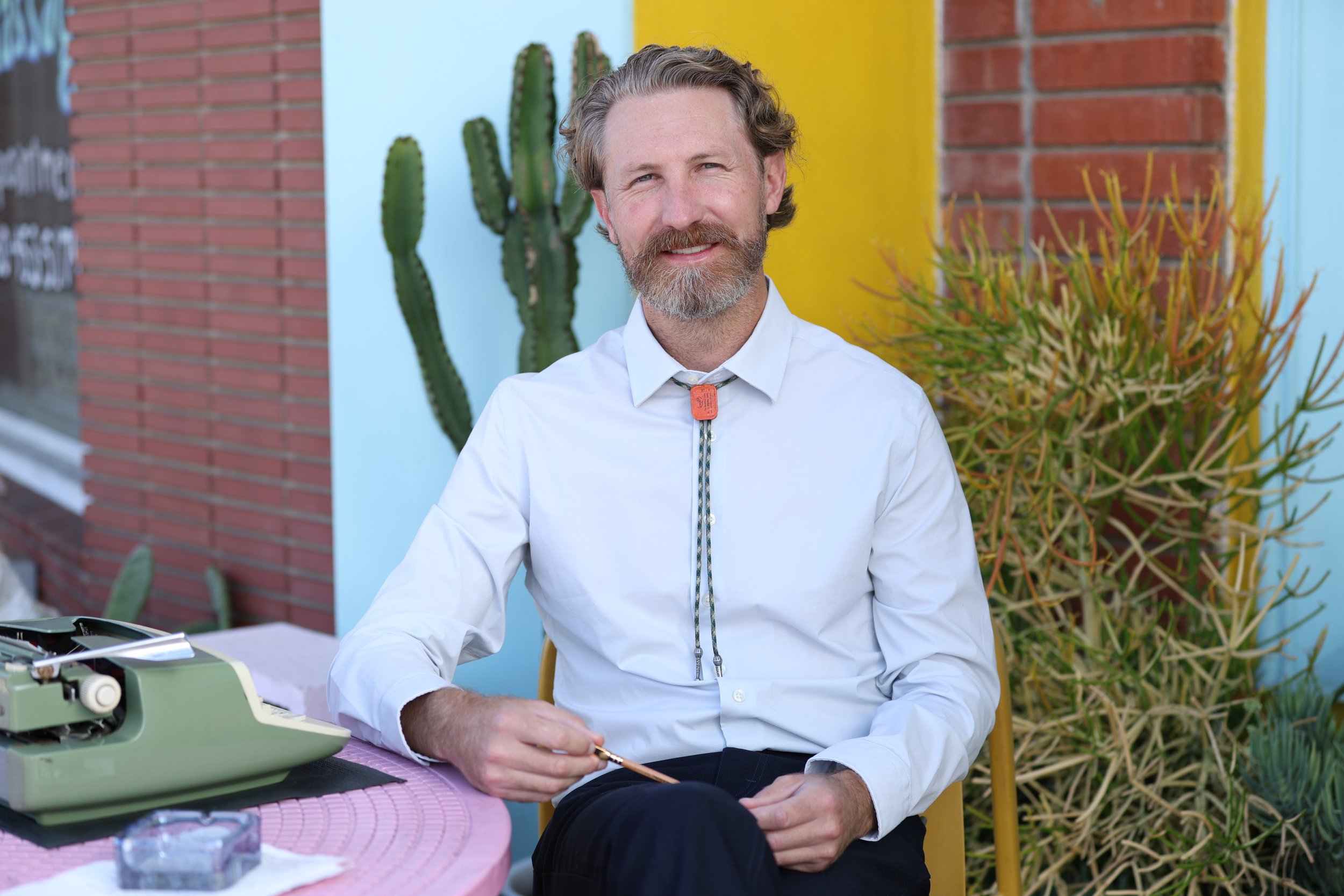
Nathan McWeeney (pen name, McWhitney) is a poet, teacher, and artist, who seeks to bring poetry to public spaces in fresh and vibrant ways. For the past two months, he has written poetry live, on a 1960s typewriter, for visitors at Balboa Park and for guests at private events. The poems he writes, on the spot, are based on the themes and topics that visitors offer. Before beginning his poetry project, he was a PhD student in Religious Studies at the University of Southern California where he focused on the literature and art that arose from the San Francisco Zen boom following the Second World War. In his teaching practice, he hosts poetry workshops where he guides students through notable poetic forms and historical movements in order to help them develop their own unique poetic styles. You can see more of his work on Instagram @mcwhitneys_poetry